
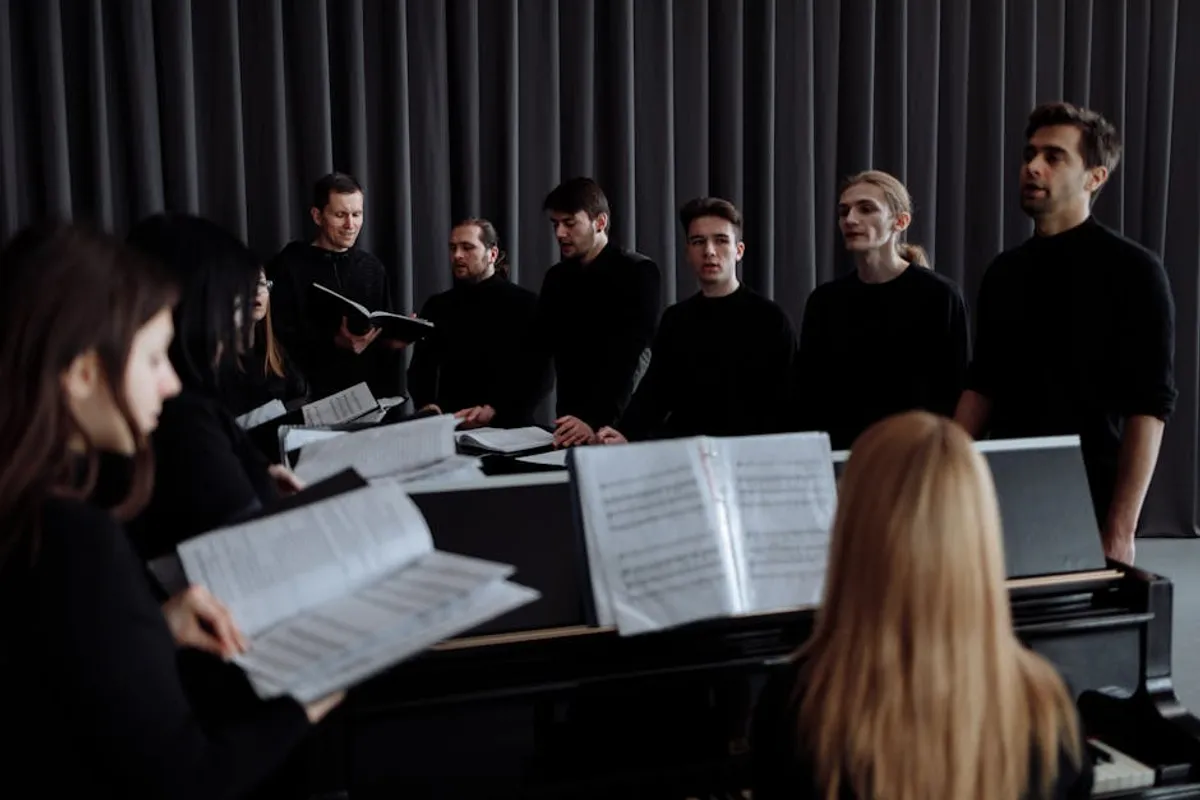
The evolution of choral music represents a continuous narrative of human expression, innovation, and cultural adaptation. From its earliest liturgical forms to the complex, diverse ensembles of today, understanding this history provides crucial context for performers, educators, content creators, and anyone involved in the commercial aspects of music production and distribution. This isn't merely an academic exercise; it informs decisions on repertoire selection, performance practice, audience targeting, and the creation of compelling musical experiences that resonate with specific historical aesthetics or contemporary tastes.
Foundational Eras: Chant, Organum, and Early Polyphony
Choral music’s documented history begins predominantly within sacred contexts. The earliest widespread form, Gregorian Chant, emerged from the Roman Catholic Church, characterized by monophonic (single-line) melodies sung unaccompanied. Its primary function was liturgical, providing a spiritual and meditative atmosphere for worship. These chants, codified largely in the 9th century, established a foundational melodic and modal language that would influence subsequent developments. For content creators, this era represents a niche market for historically informed recordings or educational materials focusing on early musicology.
The transition from monophony to polyphony—music with multiple independent melodic lines—began with Organum in the 9th to 12th centuries. Initially, this involved adding a parallel voice to a pre-existing chant melody, often at the interval of a fourth or fifth. Over time, organum grew more elaborate, with voices moving in contrary motion or featuring sustained chant notes against florid upper voices. The Notre Dame School in Paris (12th-13th centuries), particularly composers like Léonin and Pérotin, pushed these boundaries further, introducing rhythmic modes and more intricate polyphonic textures. This period is critical for understanding the genesis of harmonic thinking and the development of musical notation, elements essential for any commercial venture dealing with sheet music or performance rights.
The Renaissance: A Cappella Mastery and Expressive Depth
The Renaissance (roughly 1400-1600) is often considered the golden age of a cappella choral music. This era saw the refinement of polyphonic techniques, emphasizing smooth, flowing counterpoint and a balance between horizontal melodic lines and vertical harmonic sonorities. Key characteristics include:
- Imitative Polyphony: Melodic phrases introduced in one voice and then successively repeated by others.
- Modal Harmony: Still rooted in church modes, but with increasing use of thirds and sixths, leading to richer, more consonant sounds.
- Text Painting: Music directly reflecting the meaning of the words (e.g., rising melodies for "ascend," descending for "descend").
- Homophony: Passages where voices move together rhythmically, creating chordal textures, often for textual clarity or dramatic emphasis.
Composers like Josquin des Prez, Giovanni Pierluigi da Palestrina, Orlande de Lassus, and William Byrd produced a vast repertoire of Masses, motets, and secular madrigals. The madrigal, in particular, showcased heightened emotional expression and intricate text setting, often for amateur or courtly entertainment. Commercially, this era offers a wealth of public domain repertoire for recordings, educational resources, and performance programming, requiring an understanding of historical performance practice for authentic delivery.
Pro Tip: When curating or performing Renaissance choral music, prioritize editions that reflect historical notation and performance practice. Modern interpretations can sometimes obscure the subtle modal nuances and textual declamation that define the era's unique sound. Authenticity drives value for niche audiences and educational markets.
Baroque Era: Grandeur, Drama, and the Orchestra
The Baroque period (c. 1600-1750) witnessed a dramatic shift in choral music, moving away from the predominantly a cappella tradition towards integration with instruments. The invention of basso continuo (a continuous bass line played by a cello or bassoon and harmonized by a harpsichord or lute) provided a harmonic foundation, freeing upper voices for more virtuosic display. Major forms developed or refined during this period include:
- Oratorio: Large-scale dramatic work for soloists, choir, and orchestra, usually on a sacred subject, performed without staging. Handel's Messiah is the quintessential example.
- Cantata: A shorter vocal work, often sacred, for soloists, choir, and instruments, typically performed during church services. J.S. Bach composed hundreds.
- Passion: A type of oratorio recounting the Passion of Christ, with Bach's St. Matthew and St. John Passions being peak examples.
The choir in the Baroque era often played a dual role: providing grand, homophonic statements that underscored dramatic moments and engaging in complex contrapuntal sections that showcased technical brilliance. The commercial appeal here lies in the enduring popularity of works like Messiah, driving demand for live performances, recordings, and sheet music. Understanding the scale and instrumental requirements is crucial for production planning and budgeting.
Classical and Romantic Periods: Expanding Forces and Emotional Depth
The Classical era (c. 1750-1820) brought principles of clarity, balance, and formal structure to choral music. While the choir often supported operatic or orchestral works, composers like Haydn and Mozart produced significant Masses (e.g., Mozart's Requiem) and oratorios that integrated the choir as a vital, expressive component within a larger orchestral framework. Beethoven's Symphony No. 9, with its monumental choral finale, famously expanded the role of the chorus within the symphonic tradition.
The Romantic era (c. 1820-1900) pushed boundaries of emotional expression, scale, and harmonic language. Choral works became more dramatic, often requiring massive forces and exploring themes of nationalism, spirituality, and human struggle. Composers like Brahms (A German Requiem), Verdi (Requiem), and Wagner (operatic choruses) created works of immense power and emotional depth. The commercial landscape for these periods involves managing larger ensembles, securing performance venues, and marketing to audiences drawn to grand, emotionally charged musical experiences.
20th Century and Beyond: Diversity, Innovation, and New Sounds
The 20th century shattered traditional harmonic and formal conventions, leading to an explosion of styles in choral music. Composers explored:
- Atonality and Dissonance: Rejecting traditional tonality for new harmonic languages (e.g., Arnold Schoenberg).
- Extended Techniques: Employing non-traditional vocal sounds, whispers, shouts, and percussive effects.
- Minimalism: Repetitive melodic and rhythmic patterns, often creating hypnotic or meditative states (e.g., Arvo Pärt, John Adams).
- Influence of Folk and Jazz: Incorporating elements from diverse musical traditions.
- Digital and Electronic Integration: Blending live voices with electronic sounds or processing.
Composers like Igor Stravinsky, Krzysztof Penderecki, and Eric Whitacre have defined distinct contemporary choral sounds. The commercial opportunities in this era are diverse, ranging from niche contemporary music festivals to educational workshops on new vocal techniques, and the licensing of modern compositions for film, television, or digital media. This requires a keen understanding of intellectual property rights and contemporary music trends.
Navigating Choral History for Commercial Application
For those operating within the commercial music sphere, understanding the historical trajectory of choral music offers strategic advantages. It allows for precise targeting of audiences, development of historically informed educational content, and the creation of unique performance or recording projects. Consider:
- Repertoire Specialization: Focusing on a specific era (e.g., Renaissance madrigals or Baroque cantatas) can establish a distinct brand identity for a choir, ensemble, or content platform.
- Educational Content: Developing courses or articles that detail performance practices, historical context, or biographical information about composers from different periods.
- Licensing and Rights: Navigating public domain works versus contemporary compositions with active copyrights is crucial for recordings, broadcasts, and sheet music publication.
- Audience Engagement: Crafting narratives around historical performances or the evolution of choral sound can attract specific demographics interested in cultural history or classical music.
The history of choral music is not a static timeline but a dynamic resource, offering endless possibilities for creative and commercial exploration.
Frequently Asked Questions
What is the oldest form of choral music?
The oldest form of choral music with documented notation and performance practice is Gregorian Chant, which developed in the Roman Catholic Church from the 6th to 9th centuries, characterized by monophonic, unaccompanied singing.
How did the role of the choir change over time?
Initially, choirs were central to liturgical worship, singing monophonic chant. With the advent of polyphony in the Renaissance, they became the primary vehicle for complex, multi-voiced compositions. In the Baroque era, choirs integrated with instruments, often supporting soloists or performing grand oratorios, while in the Classical and Romantic periods, their role expanded further within operatic and symphonic works, often requiring larger forces and greater dramatic expression.
What are the key differences between Renaissance and Baroque choral music?
Renaissance choral music is primarily a cappella, emphasizing smooth, imitative polyphony, modal harmony, and balanced textures. Baroque choral music, in contrast, heavily features instrumental accompaniment (basso continuo), often juxtaposes soloists with the choir, employs a more functional tonal harmony, and tends towards greater dramatic contrast and virtuosic display.
Is there a commercial market for historical choral music?
Yes, a robust commercial market exists for historical choral music, encompassing recordings, live performances by professional ensembles, sheet music sales (especially for public domain works), educational resources, and licensing for film, television, and digital media. Niche audiences often seek out historically informed performances and authentic interpretations.