
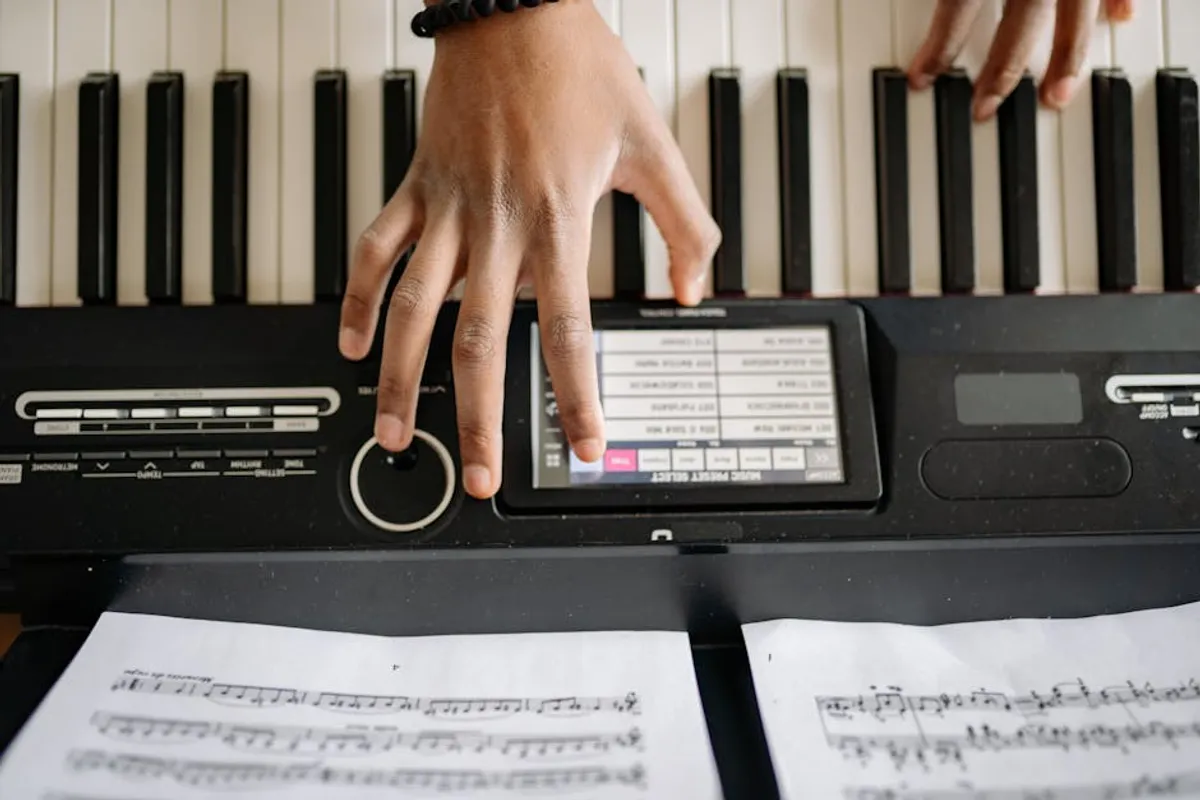
The landscape of music education is diverse, serving a broad spectrum of learners from absolute beginners to advanced practitioners seeking specialized skills. For content creators, educational platforms, and publishers, identifying and developing effective music education resources requires a precise understanding of learner needs, pedagogical approaches, and technological capabilities. The commercial viability and educational impact of these resources hinge on their ability to deliver tangible learning outcomes, maintain engagement, and adapt to evolving educational trends. This article delineates the core components and strategic considerations for navigating and contributing to the music education resource market, focusing on what constitutes valuable content and how it reaches its intended audience.
Categorizing Music Education Resources by Focus and Format
Music education resources manifest in various forms, each tailored to specific learning objectives and user preferences. Understanding these categories is crucial for both resource development and strategic deployment.
Interactive Software and Applications
These resources prioritize active engagement and immediate feedback, often leveraging gamification or real-time analysis to reinforce learning. They are particularly effective for developing practical skills such as ear training, rhythm recognition, sight-reading, and instrument proficiency. Examples include digital audio workstations (DAWs) with integrated tutorials, music theory apps, and interactive notation software. Their value lies in their ability to provide a dynamic learning environment that traditional methods often cannot replicate, offering personalized pacing and instant correction.
Structured Online Courses and Curricula
Designed for systematic learning, these resources offer a comprehensive pathway through a specific musical discipline, from foundational theory to advanced performance techniques. They typically include video lessons, downloadable materials, quizzes, assignments, and often community forums for peer interaction. The commercial appeal of structured courses derives from their promise of guided progression and certification, catering to learners who prioritize a clear, measurable educational journey. Publishers benefit from the ability to package extensive content into marketable units.
Print and Digital Publications
This category encompasses traditional textbooks, method books, sheet music collections, theory workbooks, and scholarly articles. While print materials offer a tangible, distraction-free learning experience, digital publications provide portability, searchability, and often supplementary audio or video content. These resources are foundational for theoretical understanding, historical context, and repertoire acquisition. Their enduring relevance stems from the authoritative, curated knowledge they present, often serving as core texts in formal educational settings.
Community-Driven Platforms and Forums
While not primary educational content themselves, these platforms facilitate learning through peer-to-peer interaction, expert Q&A, and shared resources. Websites dedicated to specific instruments, genres, or music production techniques often host active communities where learners can seek advice, share progress, and collaborate. The value here is in the informal learning, motivation, and networking opportunities they provide. For resource developers, these platforms represent vital channels for audience engagement, feedback, and content distribution.
Key Factors in Resource Development and Curation
The effectiveness of any music education resource is determined by several critical factors, impacting its pedagogical soundness, content accuracy, and overall user experience.
Pedagogical Soundness and Methodological Approach
An effective music education resource must employ proven teaching methods that align with cognitive learning principles. This includes clear explanations, logical progression of concepts, appropriate scaffolding of difficulty, and opportunities for practice and application. Resources should cater to various learning styles, incorporating visual, auditory, and kinesthetic elements. For instance, a resource teaching harmony might use visual diagrams for chord structures, audio examples for listening, and interactive exercises for playing. The inclusion of assessment tools and progress tracking further enhances pedagogical value, allowing learners to monitor their development.
Content Accuracy and Authority
The credibility of music education resources depends entirely on the accuracy of their information and the authority of their creators. This necessitates content developed or rigorously reviewed by experienced musicians, educators, and subject matter experts. Inaccuracies in notation, theory explanations, historical facts, or technical instructions can undermine a learner's progress and the resource's reputation. Publishers and platforms must prioritize expert vetting to ensure the information provided is reliable and up-to-date, especially in rapidly evolving fields like music technology.
User Experience and Accessibility
A well-designed user experience (UX) is paramount for maintaining learner engagement and facilitating effective knowledge transfer. This includes intuitive navigation, clear visual design, responsive interfaces across devices, and minimal technical barriers. Accessibility considerations, such as compatibility with screen readers, adjustable font sizes, and alternative text for images, broaden the reach of the resource to learners with diverse needs. Resources that are frustrating to use, difficult to navigate, or inaccessible to certain populations will see reduced adoption, regardless of content quality.
Pro Tip: When developing or selecting music education resources, prioritize those that integrate practical application alongside theoretical knowledge. Resources that encourage immediate implementation—whether through instrument practice, composition exercises, or analytical tasks—foster deeper understanding and skill retention more effectively than purely theoretical approaches. A resource might explain chord voicings, but its true value emerges when it prompts the learner to play those voicings on an instrument or apply them in a harmonic progression.
Leveraging Digital Platforms for Wider Access and Engagement
The digital realm has transformed how music education resources are delivered, consumed, and monetized, offering unprecedented opportunities for reach and interactivity.
Subscription Models and Premium Content
Many digital music education platforms operate on subscription models, providing access to a library of courses, lessons, and interactive tools for a recurring fee. This model offers predictable revenue streams for publishers and continuous access for learners. Premium content, such as one-on-one coaching, advanced workshops, or exclusive masterclasses, can be offered as upsells or higher-tier subscriptions, catering to learners seeking more personalized or specialized instruction. The success of these models relies on a consistent influx of high-quality, engaging content that justifies the ongoing investment.
Integration with Learning Management Systems (LMS)
For institutional adoption, music education resources often need to integrate seamlessly with existing Learning Management Systems used by schools, universities, and private academies. Compatibility with standards like SCORM or LTI allows for easy deployment, student tracking, and grade reporting, making the resources more attractive to educational institutions. This integration streamlines administrative tasks and provides educators with tools to monitor student progress and performance within a familiar environment.
Community Building and Social Learning Features
Digital platforms can foster vibrant learning communities through integrated forums, comment sections, group projects, and live Q&A sessions. These features transform a solitary learning experience into a collaborative one, allowing learners to share insights, ask questions, and receive support from peers and instructors. For resource providers, these communities generate user-generated content, increase engagement, and provide valuable feedback for content improvement and future development.
Developing Effective Music Learning Paths
To maximize commercial and educational impact, focus on creating or curating music education resources that form cohesive learning paths. Identify specific learner demographics—e.g., aspiring producers, classical guitarists, jazz improvisers—and tailor resource bundles that address their unique skill gaps and progression needs. Emphasize modularity, allowing learners to combine different resources to suit individual goals, while ensuring each module stands alone as a valuable learning unit. Continuously gather user feedback to refine content, adapt to new technologies, and remain responsive to the evolving demands of the music education market.
Frequently Asked Questions
What defines a high-quality music education resource?
A high-quality resource is characterized by pedagogical soundness, accurate and authoritative content, intuitive user experience, and the ability to deliver measurable learning outcomes through clear instruction and practical application opportunities.
How can digital music education resources be effectively monetized?
Effective monetization often involves subscription models for ongoing access, premium content tiers for specialized learning, direct sales of individual courses or materials, and integrations with institutional Learning Management Systems for broader adoption.
What are the key considerations for developing new music education content?
New content development should prioritize a clear understanding of target learner needs, adherence to established pedagogical principles, rigorous content accuracy and expert review, and a user-centric design that ensures accessibility and engagement.
How do different learning styles impact resource selection?
Different learning styles (visual, auditory, kinesthetic) necessitate a variety of resource formats. Effective resources often integrate multiple modalities, such as visual diagrams, audio examples, and interactive exercises, to cater to a broader range of learners.