
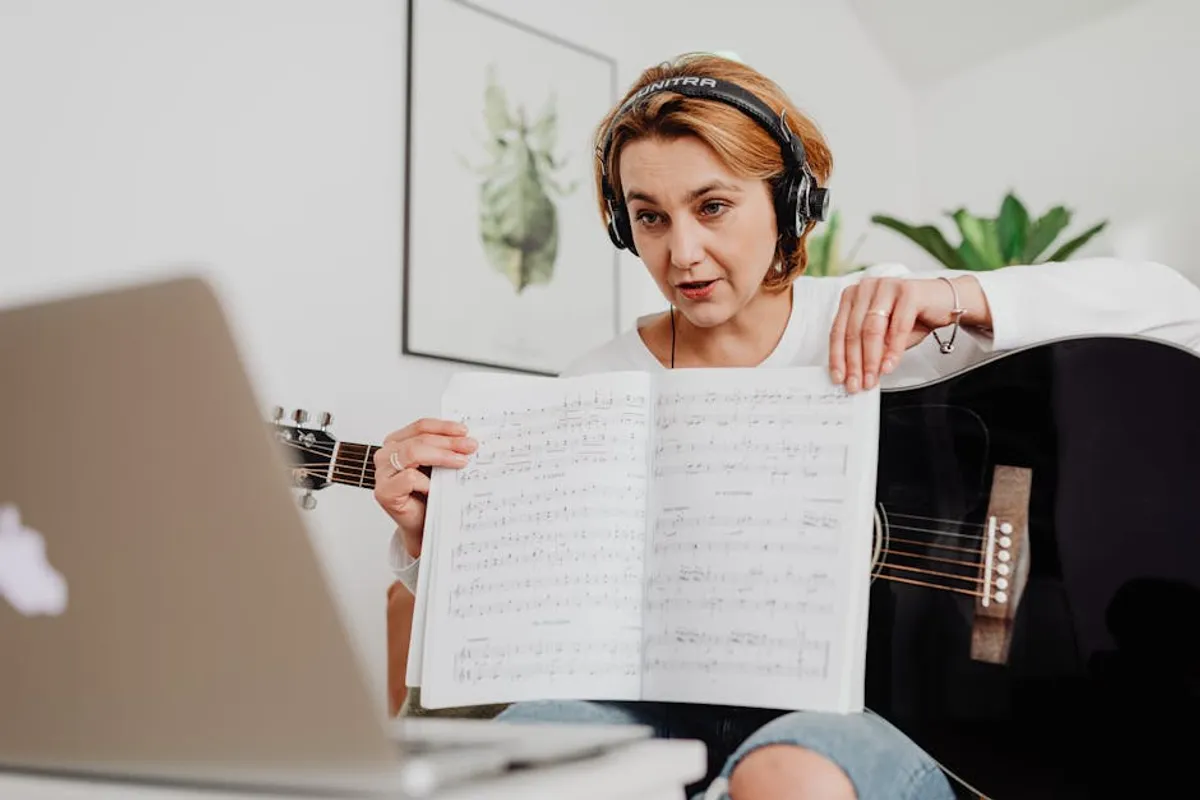
Navigating the expansive landscape of online music education presents both opportunity and challenge for learners. The sheer volume of platforms, apps, and courses available can be overwhelming, making it difficult to discern which resources genuinely accelerate skill development versus those offering superficial engagement. For serious learners, the objective is not merely to consume content but to acquire practical, transferable musical abilities, whether that involves mastering an instrument, understanding complex theory, or delving into production techniques. This article evaluates a curated selection of online music resources, focusing on their pedagogical approach, content depth, interactive features, and overall efficacy for various learning objectives. The aim is to provide clarity for individuals seeking structured, effective pathways to enhance their musical proficiency, moving beyond generic tutorials to platforms designed for sustained, measurable progress.
What to Look For in an Online Music Resource
When selecting an online music resource, several critical factors differentiate effective platforms from less impactful alternatives. Prioritize resources that offer structured curricula, not just isolated lessons. A clear learning path ensures progressive skill acquisition, building foundational knowledge before advancing to more complex concepts. Interactivity is paramount; platforms incorporating real-time feedback, practice tools, or gamified elements often lead to higher engagement and retention compared to passive video lectures. Evaluate the quality and credentials of instructors or content creators, especially for advanced topics. Consider the breadth and depth of the content library—does it cover diverse musical genres, instruments, or theoretical concepts relevant to your goals? Finally, assess the community features, if any, as peer interaction and instructor support can significantly enhance the learning experience. Look for resources that clearly articulate their pedagogical philosophy and provide transparent progress tracking.
1. Yousician
Yousician positions itself as a gamified music learning platform, primarily focused on guitar, piano, ukulele, bass, and singing. Its core appeal lies in its interactive feedback system, which listens to your playing via a device's microphone and provides immediate, color-coded responses on pitch and timing accuracy. This instant validation or correction loop mimics a private instructor's guidance, making practice sessions highly engaging and effective for beginners. The curriculum is structured into learning paths, progressing from basic techniques to more advanced songs and exercises. Content includes thousands of songs, exercises, and tutorials, catering to various skill levels and musical tastes. The platform's strength lies in making the initial stages of instrument learning accessible and fun, reducing the friction often associated with traditional methods.
Best for: Beginners and intermediate learners seeking an engaging, interactive, and gamified approach to learning guitar, piano, ukulele, bass, or singing, with immediate performance feedback.
Pros: Real-time audio feedback on accuracy; extensive song library across genres; structured learning paths with clear progression; highly motivating gamified interface; supports multiple instruments within one subscription.
Cons: Audio detection can be sensitive to background noise or instrument volume; advanced theory concepts are less emphasized than practical playing; subscription model can be costly for long-term use without consistent engagement; less suitable for advanced players seeking deep theoretical or improvisational instruction.
Verdict: Yousician excels at transforming instrument practice into an addictive, progress-driven activity, making it a highly effective entry point for new musicians. Its immediate feedback loop is a significant pedagogical advantage for developing foundational playing skills.
2. Flowkey
Flowkey specializes in piano learning, offering an extensive library of songs and interactive lessons designed for all skill levels, from absolute beginners to advanced players. Its standout feature is the ability to learn songs at your own pace, with options for a waiting mode that pauses until you play the correct notes, and a loop function for practicing difficult sections. Flowkey utilizes your device's microphone or a MIDI connection to provide real-time feedback, similar to Yousician, but with a dedicated focus on piano pedagogy. The platform breaks down complex pieces into manageable sections, often providing video tutorials for specific techniques and fingerings. Its content spans classical, pop, jazz, and film scores, ensuring a broad appeal for various musical interests.
Best for: Piano learners of all levels who prioritize learning popular songs and classical pieces with interactive guidance and detailed fingerings, particularly those who benefit from a visual, step-by-step approach.
Pros: Large and diverse song library with official sheet music; excellent interactive feedback for piano; high-quality video tutorials for techniques and songs; flexible learning modes (wait mode, loop); clear visual interface for note reading.
Cons: Exclusively for piano; free version is very limited; while comprehensive for songs, it's less focused on deep music theory beyond what's directly applicable to pieces; requires consistent internet connection for full functionality.
Verdict: Flowkey provides a highly effective and enjoyable pathway to piano proficiency, particularly for those motivated by learning specific pieces. Its interactive features and high-quality song arrangements make it a strong choice for practical piano skill development.
3. JustinGuitar
JustinGuitar, founded by Justin Sandercoe, stands as one of the most comprehensive and respected free online resources for guitar learning. It offers a meticulously structured curriculum, ranging from absolute beginner to advanced levels, covering acoustic and electric guitar. The platform's strength lies in its clear, concise, and highly effective video lessons, supplemented by downloadable materials, song tutorials, and practice routines. Unlike gamified apps, JustinGuitar emphasizes foundational technique, ear training, and music theory integration from the outset, providing a holistic learning experience. While the core content is free, optional paid resources like songbooks, apps, and advanced courses are available, supporting the platform's continued development. Its community forum also provides a supportive environment for learners.
Best for: Guitar learners of all levels seeking a structured, comprehensive, and largely free curriculum with an emphasis on strong foundational technique, ear training, and practical music theory, taught by an experienced instructor.
Pros: Extensive, well-organized, and free core curriculum; high-quality, clear video lessons; covers a vast range of styles and techniques; strong emphasis on fundamentals and practice routines; supportive community forum.
Cons: Lacks real-time interactive feedback found in app-based solutions; relies on learner self-discipline for consistent practice; optional paid content can add up if pursuing all resources; primarily video-based, less interactive than some modern apps.
Verdict: JustinGuitar remains an unparalleled resource for aspiring guitarists, offering a pedagogical depth and breadth that few other free platforms can match. Its structured approach builds genuine musical competence, not just rote memorization.
4. MusicTheory.net
MusicTheory.net is a foundational online resource dedicated to teaching music theory concepts and providing interactive ear training and practice exercises. It offers a clean, straightforward interface with lessons covering topics from basic notation and intervals to advanced harmony and counterpoint. The site's strength lies in its clarity and conciseness, breaking down complex theoretical ideas into understandable modules. Beyond the lessons, it provides customizable trainers for ear training (intervals, chords, scales), note identification, key signatures, and rhythm. These interactive tools are invaluable for developing practical musicianship skills directly linked to theoretical understanding. The site is largely free, with an optional paid app that mirrors the web content for offline use.
Best for: Students, musicians, and anyone seeking a clear, comprehensive, and interactive resource for learning music theory fundamentals and developing ear training skills, from beginner to intermediate levels.
Pros: Free, high-quality, and comprehensive lessons; excellent interactive trainers for ear training, note identification, and rhythm; clear and concise explanations; customizable exercises; no account required for basic use.
Cons: Primarily text-based lessons with some audio examples, less visually engaging than video-centric platforms; lacks advanced compositional tools or deep dive into specific historical contexts; no direct instructor interaction or community features.
Verdict: MusicTheory.net is an indispensable tool for building a solid theoretical foundation and honing essential ear training abilities. Its practical, interactive exercises are crucial for internalizing abstract concepts.
5. Teoria.com
Teoria.com offers a robust and free suite of music theory tutorials and interactive exercises, similar to MusicTheory.net but with a slightly different pedagogical approach and content depth. It provides detailed lessons on intervals, chords, scales, harmony, rhythm, and analysis, often with more in-depth explanations and examples than some competitors. The site's interactive exercises are highly customizable, allowing users to focus on specific areas of weakness and track their progress. It includes advanced features like harmonic analysis tools and a virtual keyboard. Teoria.com is particularly strong in its ear training modules, which are extensive and cover a wide range of musical elements. The site's design is functional, prioritizing content and interactivity over modern aesthetics.
Best for: Serious music theory students and musicians who require in-depth explanations, highly customizable ear training exercises, and a comprehensive free resource for advanced theoretical concepts and analysis.
Pros: Very comprehensive and free music theory lessons; highly customizable and extensive ear training and practice exercises; covers advanced topics in harmony and analysis; includes a virtual keyboard and analysis tools; supports multiple languages.
Cons: User interface is somewhat dated compared to newer platforms; primarily text-based lessons with audio, less dynamic than video instruction; lacks community features or direct instructor support; can be overwhelming for absolute beginners due to depth.
Verdict: Teoria.com is an exceptional free resource for deep dives into music theory and rigorous ear training. Its customizability and comprehensive coverage make it ideal for dedicated learners beyond the introductory phase.
6. Fender Play
Fender Play is an online learning platform from the iconic instrument manufacturer, offering structured video lessons for guitar, bass, and ukulele. It distinguishes itself by providing high-quality, cinematic video production and a curriculum designed by professional instructors, focusing on popular songs and fundamental techniques. Learners can choose a specific path based on their preferred genre (e.g., Rock, Blues, Folk, Country) which tailors the lesson plan to their interests. The platform uses a "learn by playing" approach, integrating riffs and full songs into lessons early on. While it lacks the real-time audio feedback of some app-based competitors, its clear visual instruction and brand credibility are significant draws. Fender Play also integrates with other Fender products, like their tuner app.
Best for: Beginners and intermediate players of guitar, bass, or ukulele who appreciate high-production-value video lessons, a structured curriculum tied to popular genres, and the credibility of the Fender brand.
Pros: High-quality video production and professional instructors; genre-specific learning paths; focuses on learning popular songs and riffs early; clear, step-by-step instruction; integration with Fender ecosystem (e.g., tuner).
Cons: Lacks real-time interactive audio feedback; subscription required, no free tier; less emphasis on deep music theory compared to dedicated theory sites; primarily geared towards pop/rock/country genres, less for classical or jazz.
Verdict: Fender Play provides a polished and accessible entry point for learning string instruments, particularly for those who are motivated by learning contemporary music and appreciate a professionally produced learning experience.
7. TrueFire
TrueFire is a vast online guitar education platform, distinguished by its immense library of over 50,000 video lessons and more than 800 courses from hundreds of renowned guitar instructors across virtually every genre imaginable. Unlike beginner-focused apps, TrueFire caters primarily to intermediate and advanced guitarists looking to refine specific techniques, explore new styles, or delve into advanced improvisation and theory. Each course typically includes high-definition video, tablature, notation, backing tracks, and often interactive tools like slow-motion and looping. The platform offers a range of learning paths and master classes, allowing for deep specialization. Its strength lies in the sheer volume and quality of its expert-led content, making it a go-to for serious guitarists.
Best for: Intermediate to advanced guitarists seeking in-depth instruction across a wide array of genres and techniques, from world-class instructors, with a focus on comprehensive courses rather than gamified quick lessons.
Pros: Enormous library of high-quality video lessons and courses; instruction from hundreds of top-tier guitarists; covers virtually all genres and skill levels beyond beginner; includes backing tracks, tabs, and notation; downloadable content for offline learning.
Cons: Can be overwhelming to navigate due to the sheer volume of content; subscription cost is higher than many beginner apps; less suitable for absolute beginners who need highly structured, basic guidance; primarily focuses on guitar.
Verdict: TrueFire stands as a premier destination for serious guitarists committed to continuous improvement, offering an unparalleled depth of expert instruction that can significantly elevate advanced playing and theoretical understanding.
8. Coursera/edX (MOOCs for Music)
Massive Open Online Courses (MOOCs) platforms like Coursera and edX offer university-level music education from prestigious institutions worldwide. These platforms provide structured courses covering music history, theory, appreciation, production, and sometimes even instrument-specific instruction, often taught by university professors. Unlike dedicated music apps, MOOCs emphasize academic rigor, critical thinking, and a broader cultural context of music. Courses typically involve video lectures, readings, quizzes, peer-graded assignments, and discussion forums. While many courses can be audited for free, a verified certificate (and access to graded assignments) usually requires a fee. This format is ideal for learners seeking a more academic, in-depth understanding of music beyond practical playing skills.
Best for: Learners seeking university-level academic instruction in music theory, history, appreciation, or production, who thrive in a structured, lecture-based environment with academic rigor and the option for certification.
Pros: Access to high-quality content from top universities and professors; structured academic curriculum; covers a wide range of music-related subjects; opportunities for peer interaction and discussion; verifiable certificates available.
Cons: Less focus on interactive, real-time instrument practice; requires significant self-discipline to complete; can be less engaging for purely practical learners; paid certificates can be expensive; completion rates can be low without commitment.
Verdict: For those prioritizing a deep, academic understanding of music as a discipline, MOOCs on platforms like Coursera and edX offer an unparalleled opportunity to learn from world-class educators and gain a comprehensive perspective.
9. Hooktheory
Hooktheory provides a unique approach to music theory, composition, and analysis, focusing on understanding chord progressions and melodic structures in popular music. Its flagship products, Hookpad and TheoryTabs, allow users to analyze songs, compose their own music using common chord progressions, and visualize melodic lines over harmonic frameworks. The platform's interactive lessons break down complex theory into practical, applicable concepts, making it accessible even for those without formal training. Hooktheory's strength lies in bridging the gap between abstract theory and practical songwriting, enabling users to understand why certain progressions sound good and how to apply these principles to their own creations. It emphasizes pattern recognition and common musical tropes.
Best for: Songwriters, producers, and musicians interested in understanding and applying music theory to composition, particularly those who want to analyze popular song structures and create their own chord progressions and melodies.
Pros: Excellent for understanding chord progressions and melodic construction in popular music; interactive tools (Hookpad, TheoryTabs) for analysis and composition; practical application of theory to songwriting; clear, accessible lessons for all levels; helps develop musical intuition for harmony.
Cons: Less focused on instrument-specific technique or ear training in isolation; primarily geared towards modern popular music, less for classical or jazz improvisation; full features of Hookpad require a purchase; can be less useful for those not interested in composition.
Verdict: Hooktheory is an invaluable resource for aspiring composers and producers, offering a practical and intuitive way to internalize harmonic and melodic principles by analyzing and creating within a popular music context.
10. Ableton's Learning Synths / Learning Music
Ableton, renowned for its Live digital audio workstation (DAW), offers two free, interactive web-based resources: "Learning Synths" and "Learning Music." These platforms are designed to demystify electronic music production and synthesis for beginners. "Learning Music" guides users through the fundamentals of rhythm, melody, harmony, and song structure using an intuitive, browser-based interface that allows for immediate experimentation. "Learning Synths" provides an interactive deep dive into subtractive synthesis, explaining oscillators, filters, envelopes, and LFOs with hands-on examples. Both resources are highly visual, engaging, and require no prior knowledge or software installation, making them excellent entry points for anyone curious about electronic music production and sound design.
Best for: Absolute beginners interested in electronic music production, sound design, and understanding the basics of synthesis and song arrangement, seeking free, interactive, and visually engaging web-based tutorials.
Pros: Free and highly interactive web-based platforms; excellent visual explanations of complex concepts; no software required; demystifies synthesis and music arrangement for beginners; produced by an industry-leading DAW company.
Cons: Does not teach specific DAW operation beyond basic concepts; limited in scope compared to full production courses; not suitable for advanced producers; requires internet access; focuses exclusively on electronic music principles.
Verdict: Ableton's interactive learning tools are a superb starting point for anyone curious about electronic music production, offering a fun, accessible, and highly effective way to grasp fundamental concepts before committing to a full DAW or paid course.
11. SightReadingFactory
SightReadingFactory is a specialized online platform dedicated to helping musicians improve their sight-reading skills across various instruments and vocal parts. Its core functionality is generating an unlimited supply of unique musical exercises on demand, ensuring that learners never encounter the same piece twice. Users can customize parameters such as instrument, clef, key signature, time signature, and difficulty level, making it adaptable for almost any musician. The platform provides immediate feedback on accuracy and rhythm, often using a microphone to listen to the performance. This constant stream of fresh material and instant assessment makes it an incredibly effective tool for developing the crucial skill of reading and performing unfamiliar music accurately and fluently.
Best for: Musicians of all instruments and vocalists who need to systematically improve their sight-reading abilities through endless, customizable practice exercises with immediate performance feedback.
Pros: Generates unlimited, unique sight-reading exercises; highly customizable parameters for instrument, clef, key, time, and difficulty; real-time feedback on accuracy and rhythm; supports a wide range of instruments and vocal parts; effective for consistent, targeted practice.
Cons: Subscription required, no free tier beyond a trial; solely focused on sight-reading, not a comprehensive music learning platform; interface is functional but not highly engaging visually; requires a microphone for feedback.
Verdict: SightReadingFactory is an indispensable, highly effective tool for any musician serious about developing or maintaining strong sight-reading skills, offering an unparalleled volume of customized practice material.
12. ToneGym
ToneGym is an online platform specifically designed for ear training, targeting musicians, producers, and audio engineers. It offers a gamified approach to developing critical listening skills, covering a wide range of exercises including interval recognition, chord identification, scale recognition, rhythm, mixing, and sound design elements like EQ, compression, and reverb. The platform features daily workouts, progress tracking, and a competitive leaderboard, which motivates consistent practice. Unlike general music theory ear trainers, ToneGym delves into the nuances of sound perception relevant to audio production, making it particularly valuable for those involved in recording, mixing, or mastering. It provides clear explanations for each exercise, reinforcing learning.
Best for: Musicians, audio engineers, and producers who want to systematically develop advanced ear training skills, including critical listening for mixing, mastering, and sound design, through a gamified and structured approach.
Pros: Comprehensive and gamified ear training for musicians and producers; covers a wide range of topics from theory to mixing; daily workouts and progress tracking; competitive elements (leaderboard) enhance motivation; clear explanations for exercises.
Cons: Subscription required for full access; less focused on instrument-specific technique or general music theory beyond ear training; can be challenging for absolute beginners without some foundational knowledge; primarily web-based.
Verdict: ToneGym provides a highly effective and engaging environment for developing a sophisticated ear, particularly for those in audio production, by breaking down complex listening skills into manageable, gamified exercises.
Choosing the Right Online Music Resource for Your Goals
Selecting the optimal online music resource requires a clear understanding of your personal learning style, specific musical goals, and commitment level. For instrument learners, consider whether you prioritize gamified interactive feedback (Yousician, Flowkey), comprehensive video instruction (JustinGuitar, Fender Play), or advanced technique refinement (TrueFire). If music theory and ear training are primary objectives, dedicated platforms like MusicTheory.net or Teoria.com offer structured, in-depth learning, while Hooktheory caters specifically to composers. Aspiring producers might find Ableton's free resources or ToneGym's ear training invaluable. For academic depth, MOOCs from Coursera or edX provide university-level curricula. Always leverage free trials or introductory content to assess a platform's interface, pedagogical approach, and content relevance before committing to a subscription. The most effective resource is one that aligns with your learning preferences and consistently motivates you to practice and progress.
Frequently Asked Questions About Online Music Resources
Q: Can online music resources replace a live instructor?
A: While online resources offer unparalleled convenience, accessibility, and often comprehensive curricula, they generally cannot fully replace the personalized, real-time feedback and nuanced guidance of a skilled live instructor. Online platforms excel at foundational skill development, structured practice, and theoretical understanding, but a live teacher can provide tailored technique correction, motivational support, and adapt lessons to individual learning challenges in ways automated systems cannot. Many learners find a hybrid approach—using online resources for consistent practice and supplementing with occasional live lessons for personalized feedback—to be most effective.
Q: Are free online music resources effective for serious learning?
A: Yes, many free online music resources are highly effective for serious learning, particularly for foundational skills and music theory. Platforms like JustinGuitar (for guitar) and MusicTheory.net or Teoria.com (for theory and ear training) offer extensive, high-quality content developed by experienced educators. The effectiveness often depends more on the learner's self-discipline and ability to follow a structured path than on a subscription fee. While paid platforms often provide more interactive features, premium content, or professional production quality, free resources can provide a robust education if approached with dedication.
Q: How do I stay motivated when learning music online?
A: Sustaining motivation in online music learning requires a proactive approach. Set clear, achievable goals, such as mastering a specific song, understanding a new theory concept, or practicing for a set duration daily. Utilize platforms with gamified elements or progress tracking to visualize your achievements. Join online communities or find practice partners to share progress and challenges. Regularly switch between learning new material and reviewing old concepts to maintain interest. Most importantly, integrate practice into a consistent routine and celebrate small victories to reinforce positive habits. Varying your learning resources can also help prevent burnout.
Q: What equipment do I need for online music learning?
A: The necessary equipment varies significantly depending on the resource and your learning goals. For instrument-specific apps (Yousician, Flowkey, Fender Play), you'll need the instrument itself, a smartphone or tablet, and often a quiet environment for microphone-based feedback. A MIDI keyboard is beneficial for piano learning apps and music production. For theory and ear training sites (MusicTheory.net, Teoria.com), a computer with internet access and headphones is usually sufficient. For music production, a computer with a digital audio workstation (DAW) and potentially an audio interface, studio monitors, or headphones are essential. Always check the specific requirements of the platform you intend to use.
Q: Can I learn music production